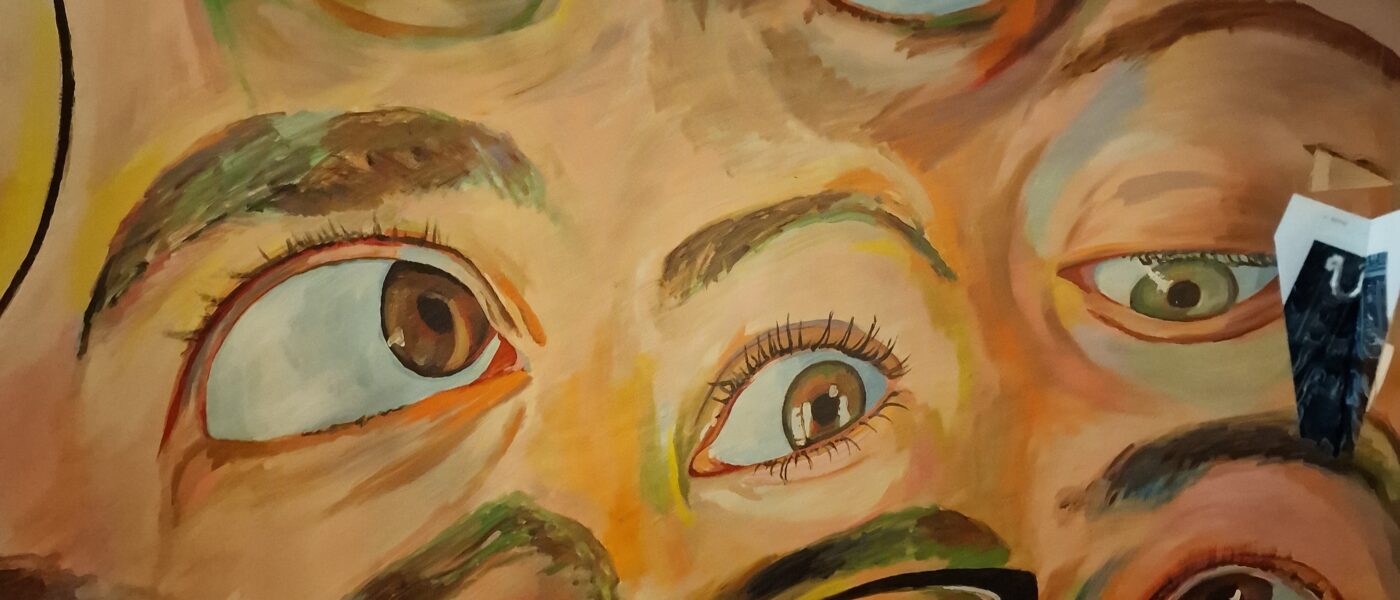
I miss when being bad at something was not a shameful experience. I miss the joy and excitement that came with starting something for the first time, when you could feel good about what you might learn and all the possibilities that seemed to come with this new adventure. There was something exciting about not knowing. You were stepping into unfamiliar territory with no idea how far you could go, what you might discover or whether this new thing might become something you loved.
Now, it feels almost impossible to be a novice at anything.
Being a beginner has somehow become an embarrassing experience. There is an awkwardness attached to admitting that you do not know how to do something, especially as an adult. We are expected to pick things up quickly, to show some natural ability from the beginning, or at the very least to hide the part where we are confused, clumsy and figuring things out. The learning process, which used to be part of the fun, has become something we seem desperate to rush through.
I don’t remember feeling this way as a child. When I wanted to try something, I simply tried it. Children are remarkably comfortable with being terrible at things. They draw people with questionable anatomy, sing loudly and off-key, make up dances that have absolutely no rhythm and create things that would probably make very little sense to anyone else. Yet they are usually incredibly proud of themselves. A child will hand you a drawing that looks like three circles and an accidental line and wait expectantly for you to admire it.
There is no crisis of identity. They don’t decide after one bad drawing that perhaps they are simply “not artistic.” They don’t try football once, miss the ball and conclude that sports are not for them. They do it again. And again. Sometimes because they want to get better, but often simply because they are having fun.
Somewhere between childhood and adulthood, we lost that freedom.
Perhaps part of it is that, as adults, we become increasingly attached to competence. We know what we are good at, we understand how to move within those spaces, and there is comfort in being capable. Starting something new disrupts that. Suddenly, you are the person asking the obvious questions. You are slower than everyone else. Your first attempt looks nothing like what you imagined in your head. You have to be corrected. Sometimes repeatedly. And if you are used to being competent, that can feel surprisingly uncomfortable.
There is also the embarrassment of being seen trying. It is one thing to be bad at something privately. It is another thing entirely to be bad at it in front of other people.
I think the internet has made this worse. We are constantly exposed to people who are extraordinarily good at things, but we rarely see the thousands of unimpressive attempts that came before what they are showing us. We also seem to have become increasingly comfortable tearing people apart under the guise of criticism. Someone shares an attempt at something and, rather than allowing them the grace of being new, people are quick to point out everything that is wrong with it. Sometimes brutally. Sometimes unnecessarily. As though trying something publicly means you have also volunteered to be humiliated for not already being excellent at it.
You decide you want to learn how to paint, and five minutes later you are watching someone create a portrait so realistic it looks like a photograph. You decide to start running and immediately find people documenting ten-kilometre morning runs as though they simply popped outside to buy bread. You pick up a camera, learn a language, try pottery, start writing, learn an instrument or attempt almost anything else, and there is an endless supply of people online reminding you just how much you do not know.
Of course, logically, we understand that these people have probably been doing these things for years. But comparison is rarely logical.
Instead of allowing somebody else’s skill to show us what might eventually be possible, we sometimes use it as evidence that we have started too late, that we lack talent or that perhaps there is no point in trying at all.
And that question: what is the point? might be one of the saddest things adulthood has done to our curiosity. Why does everything need a point? Why does every new interest have to lead somewhere?
You mention that you enjoy baking and someone tells you that you should start selling cakes. You take a few beautiful photographs, and suddenly you should become a photographer. You make jewellery, crochet, paint, write, cook, sew or design something and almost immediately the conversation becomes about whether you can make money from it.
There is nothing wrong with turning something you love into a career. I have done exactly that with things I love. But I also think we have become so accustomed to measuring the value of our time through productivity that we struggle to understand doing something purely because it makes life more interesting.
A hobby does not have to become a side hustle. You don’t need to become excellent at everything you enjoy. You don’t even have to become good. This is something I am finding surprisingly difficult to accept.
I like being good at things. I like knowing what I am doing. I like producing something I can look at afterwards and feel proud of. I imagine most people do. But there is a particular kind of freedom that comes from doing something when there is absolutely no expectation that you will be impressive.
Recently, I have been thinking about how many things I have given up because I decided they were not good enough, or because I worried that other people would not like them.
I used to paint, nothing serious. Nothing planned. Just random, pointless images. Brush to canvas, completely freestyle. Sometimes the paintings looked nice. Other times, they looked questionable. But I enjoyed it. It made me happy. It gave me peace. And then, somewhere along the way, I stopped. Not because I stopped enjoying it, but because I decided I wasn’t good enough. The paintings were not good enough to sell, so eventually I began to wonder: what is the point?
When I think about that now, it feels almost absurd. If something brought me peace and joy, why did it need commercial value to justify its existence? Why did being unable to sell it suddenly make the experience meaningless? Somewhere along the way, I had convinced myself that enjoyment alone was not enough of a return. And I wonder how many things we have abandoned for the same reason.
Maybe you wanted to take a dance class but worried that everybody else would know the steps. Maybe you wanted to learn how to swim as an adult and felt embarrassed that you hadn’t already learnt. Maybe you wanted to start drawing, play an instrument, learn a language or try a sport, but the thought of being visibly terrible at it made staying home more appealing.
So we remain within the boundaries of what we already know. And after a while, those boundaries can become very small.
There is something valuable about putting yourself in situations where you are not immediately good. Apart from the obvious possibility that you might eventually improve, it teaches you to survive the embarrassment of imperfection. You learn that making mistakes in front of people is rarely as catastrophic as it feels. You learn how to ask for help. You learn patience. You remember what it feels like not to know.
It also gives you a different appreciation for people who are excellent at what they do. Once you have struggled to learn something yourself, mastery stops looking like magic. You begin to understand how much repetition is hidden inside something that looks effortless.
The person who speaks a language fluently once stumbled through basic sentences. The photographer whose work seems instinctive once did not understand their camera. The person who dances beautifully once had to count the steps. The writer whose sentences you underline once wrote things they would probably be horrified for you to read now.
Everybody we admire was once embarrassingly new. Maybe we need to give ourselves permission to be that person again.
Not because everything we try will eventually become something significant. It won’t. There will be things we try and abandon. Things we discover we genuinely do not enjoy. Things we remain mediocre at for years. Things that never produce anything useful, profitable or impressive.
But perhaps usefulness was never supposed to be the only measure.
There is value in curiosity. There is value in play. There is value in discovering that you can do something badly and still enjoy doing it.
I want to get back to that.
I want to try things without immediately wondering whether I have talent. I want to experience the excitement of not knowing what I am doing and being curious enough to find out. I want hobbies that don’t need websites, strategies, equipment upgrades or monetisation plans. I want to make things that are ugly, sing songs I cannot sing, learn skills I may never master and occasionally be the worst person in the room without feeling as though it says something terrible about me.
Mostly, I want to stop treating being a beginner like something I need to apologise for.
There was a time when not knowing meant there was something new to discover. When being bad at something simply meant you had only just begun.
I think I miss that more than I realised.
STAY SHINING